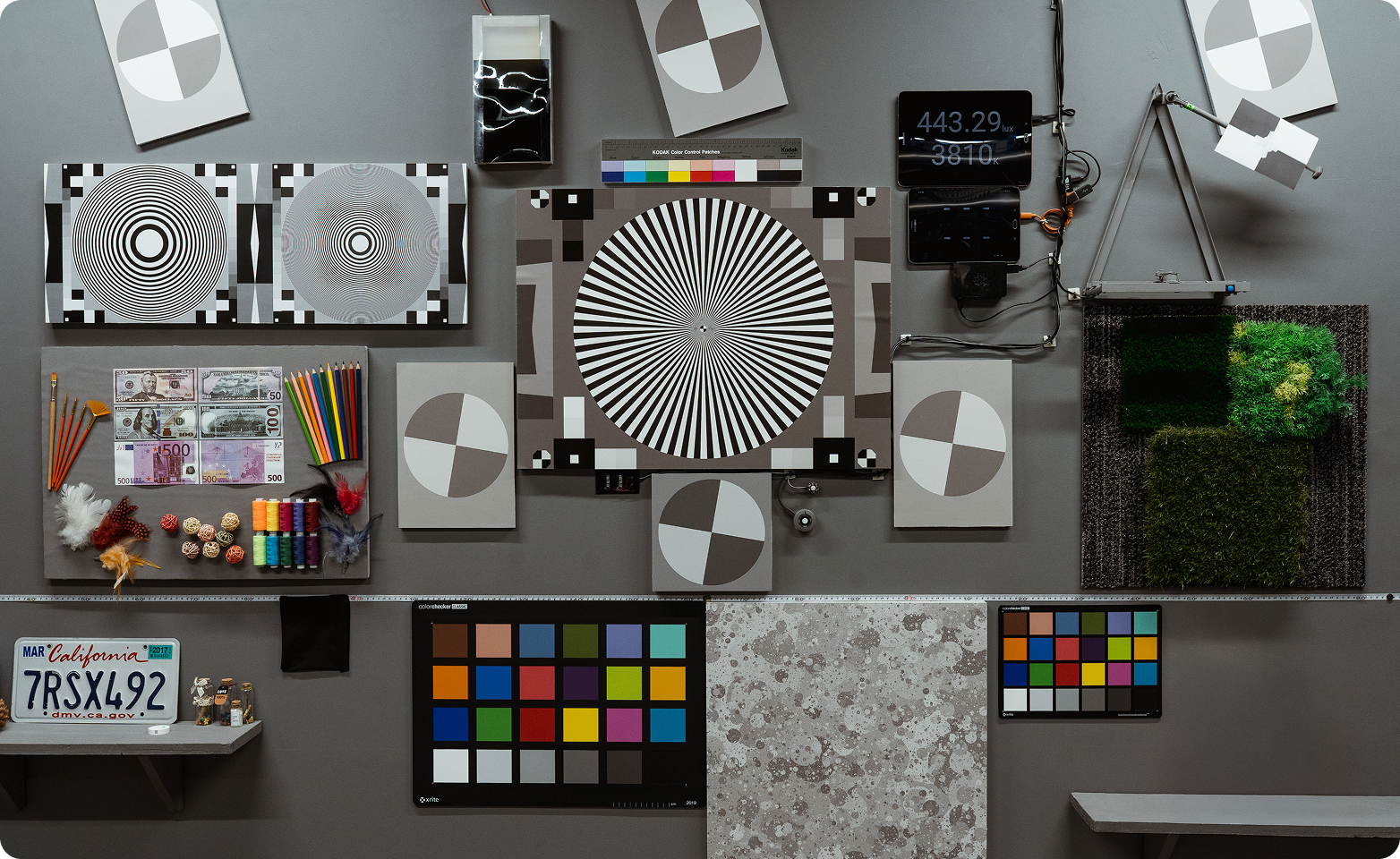
Fisheye Distortion Correction for Wide Angle
Security Cameras
SQUAD designed and implemented a real time fisheye dewarping pipeline that converts distorted circular frames into rectified views suitable for computer vision and human monitoring.

Consistent rectified video feed
across wide-angle security cameras

Reduced geometric distortion
across the full field of view

Real-time dewarping
at 30 FPS
running directly on camera hardware
Client at a Glance

Service Type
Image quality and computer vision for security cameras

Industry
Consumer electronics and smart security cameras

Engagement
Collaboration on firmware and image quality projects

Region
Global
The client is a global consumer electronics brand that produces smart indoor and outdoor security cameras used in residential and commercial settings.
Challenge
Wide angle and fisheye lenses introduced visible distortion in images and video.
This created several issues:
Images and video looked unnatural to human viewers, which affected perceived image quality.
Real time video analytics tasks such as motion detection and object detection became more difficult because objects appeared deformed and their positions were shifted.
Existing computer vision models were trained on rectilinear imagery, so distortion led to lower accuracy and required additional data that covered both distorted and undistorted views.
The client needed a method that would correct fisheye distortion on the device, preserve as much field of view as possible and remain suitable for embedded processing.
Solution
SQUAD image quality and firmware engineering teams created a real time fisheye dewarping pipeline deployed on the camera.
The main elements of the solution were:
Design of a full dewarping pipeline that transforms circular distorted frames into rectified and perspective corrected views.
Calibration of intrinsic camera parameters for target devices, including focal length and principal point.
Modeling of radial and tangential lens distortions based on calibration data.
Construction of undistortion maps and projection models that balance field of view and geometric accuracy.
Implementation of geometric transformations in a form suitable for embedded processing and integration into the existing video pipeline.
Technologies and frameworks
The work relied on the following tools and facilities:
SQUAD labs and specialized equipment for camera testing and calibration
OpenCV for camera calibration, undistortion maps and projection models
C++ and Python for core algorithm development and testing
GStreamer for integration of the dewarping stage into the real time video pipeline
Results & Impact
technical outcomes
Reduced geometric distortion
Geometric distortion across the field of view was reduced by a measurable amount, so straight lines and object shapes are preserved more accurately in the corrected image.
Real-time dewarping at 30 FPS
The dewarping pipeline was optimized for embedded hardware and runs in real time at 30 frames per second, with field-of-view loss kept to a minimum so cameras retain wide coverage.
business outcomes
Lower data collection and training costs
By correcting fisheye distortion in the video pipeline, the client avoided separate data collection and model retraining for distorted imagery, saving an estimated several million in local currency over the program’s lifetime.
Reusable solution across projects
The same dewarping approach has been reused in additional projects for this client and others, which reduces engineering effort on new camera models and keeps behavior consistent across the product line.
customer outcomes
Improved viewing experience
The number of false alerts decreased, and push notifications for motion events arrive faster, since computation is carried out on the device.
More reliable analytics features
Corrected geometry improves downstream object detection accuracy in on-device analytics pipelines, leading to more reliable behavior of features that depend on computer vision.
Contact us
by filling out
the form
to get started.

Get In Touch
Other Cases

AI-Driven Database Design Framework for Vision Products Analytics

47% faster warehouse delivery

96% lower data-quality NULL rate

99.9% production reliability
Product Design for Intelligent Vision Products

4 core interaction areas designed

Unified UI/UX across platforms
