

AI-Driven Database Design Framework for Smart
Home Analytics
SQUAD designed and delivered a unified data foundation across cost, device, and market data, using an AI-driven database design framework to build a production data warehouse 47% faster than the benchmark.

47% faster warehouse delivery
about 20 weeks vs. a 38+ week benchmark

96% lower data-quality NULL rate
reduced from 59% to 2% in a single session

99.9% production reliability
sustained since general availability launch
Client at a Glance

Service Type
Enterprise data platform and AI-driven database design

Industry
Consumer electronics and smart-home devices

Engagement
Dedicated data engineering and analytics squad

Region
Global
The client is a global consumer electronics brand whose business-planning organization owns cost, device economics, and market performance across a broad smart-home device portfolio.
This team makes tradeoff decisions that shape the roadmap, including unit costs, R&D spend, guardrails, and market response. However, the data behind those decisions was spread across multiple systems, formats, and business functions.
Challenge
The client had no single source of truth for cost, device, and market data. Answering a strategic question such as what a device really costs and how it performs in the market requires manual reconciliation across
8+ disconnected source systems.
This created several challenges:
Strategic tradeoff decisions took days or weeks, slowing roadmap planning and increasing coordination effort across operations and finance.
The scope was large and complex, requiring a Medallion architecture with 50+ tables in the Silver layer alone.
Data quality gaps created delivery risk, including NULL rates close to 60% in critical datasets.
Source data became available in stages over several months, making manual schema design, validation, and documentation difficult to control.
The client needed a way to drastically accelerate database design, validation, and documentation without sacrificing production-grade data quality.
Solution
SQUAD applied an AI-driven database design framework that encodes the process of good database design into an AI orchestrator. Instead of hand-building every schema and validation step, the team used the framework to design, simulate, validate, and document the warehouse as the source data became available.
The main elements of the solution were:
Creation of an IDE-resident orchestration engine governed by automation-first rules, with human decision authority for schema options and production deployment.
Application of the RADAR and GAPS methodology to iterate through requirements, architecture, simulation, analysis, and refinement until the schema converged.
Design and implementation of a Medallion warehouse architecture with raw ingestion from 9 source systems, a dependency-ordered Silver star schema, and AI-optimized Gold views.
Implementation of DQ-as-code, automated regression queries, dev/prod cross-checks, and quality gates to catch issues before launch.
Delivery of a natural-language access layer with Slack advisor, executive BI dashboards, and IDE integration for sub-30-second answers to cost, device, and market questions.
The delivery approach followed four stages:
Discovery and GAPS audit across source schemas and storage prefixes to map the estate and capture requirements before committing scope.
Architecture and design with validated, dependency-ordered DDL and quality gates simulated before implementation.
Iterative build and validation as data was unlocked over time, including 60 Silver tables, 32 Gold views, and 119+ automated regression queries.
Serve and operate with BI dashboards, natural-language access, freshness SLAs, audit trails, and 99.9% production reliability.
Technologies and frameworks
The solution relied on the following tools and platforms:
Data storage: Amazon Redshift, Amazon Athena, Amazon S3, PostgreSQL
Ingestion and orchestration: Amazon MWAA, AWS Glue, AWS Step Functions, AWS Lambda
AI and framework: IDE orchestrator, RADAR and GAPS methodology, LLM tooling, Hugging Face, sentence-transformers
BI and serving: Amazon QuickSight, Tableau, Slack advisor, natural-language Q&A
Quality and governance: DQ-as-code, 15 quality gates, SOX/GDPR classification, audit trails
Monitoring and infrastructure: Amazon CloudWatch, freshness SLAs, cross-environment migration audits
Results & Impact
technical outcomes
Production schema delivered
SQUAD delivered a production warehouse with a 60-table Silver star schema and 32 AI-optimized Gold views across 9 integrated source domains, deployed through 21+ production migrations.
Production reliability sustained
The platform has sustained 99.9% reliability since general availability, supported by managed Airflow, freshness SLAs, audit trails, dev/prod cross-validation, and automated regression coverage.
business outcomes
47% faster warehouse delivery
The full 9-source warehouse build was delivered in about 20 weeks, including documentation, pull requests, and QA, compared with a 38+ week code-only benchmark.
96% lower data-quality NULL rate
Root-cause analysis and remediation reduced NULL rates from 59% to 2% in a single session, replacing what would typically require a much longer manual fix cycle.
customer outcomes
Answers in seconds, not weeks
Decision-makers can now ask cost, device, and market questions in natural language and receive sub-30-second answers through Slack, BI dashboards, or the IDE.
Confident, unified roadmap decisions
A single source of truth replaced fragmented documents, allowing tradeoff decisions to rely on consistent, validated data instead of manual reconciliation.
Contact us
by filling out
the form
to get started.

Get In Touch
Other Cases
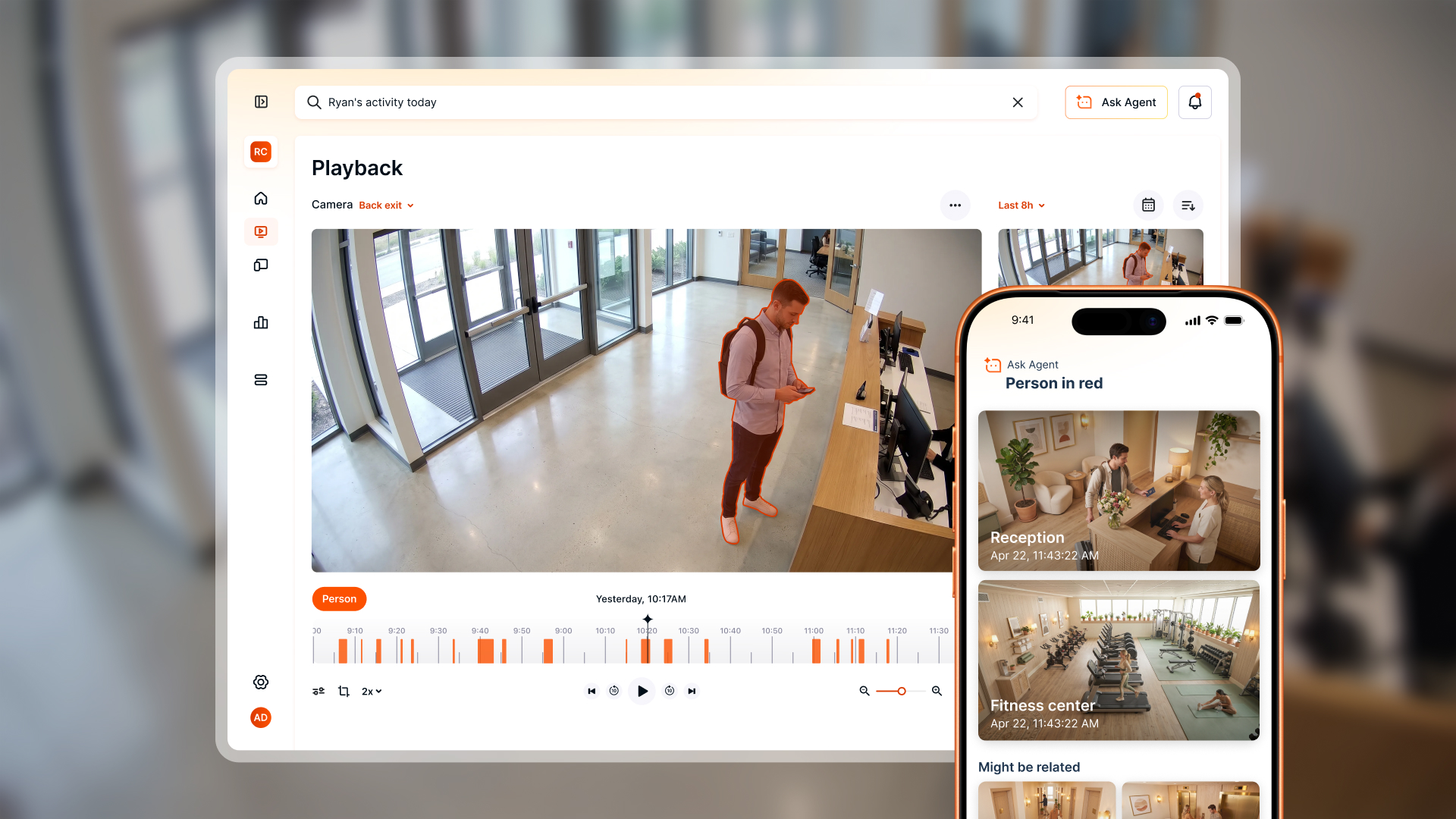
Product Design for Intelligent Vision Products

4 core interaction areas designed

Unified UI/UX across platforms

Faster time-to-market enabled

Product Validation for a Battery-Powered Smart Doorbell

500+ devices deployed

More than 15 features validated
