Enterprise Security Operations
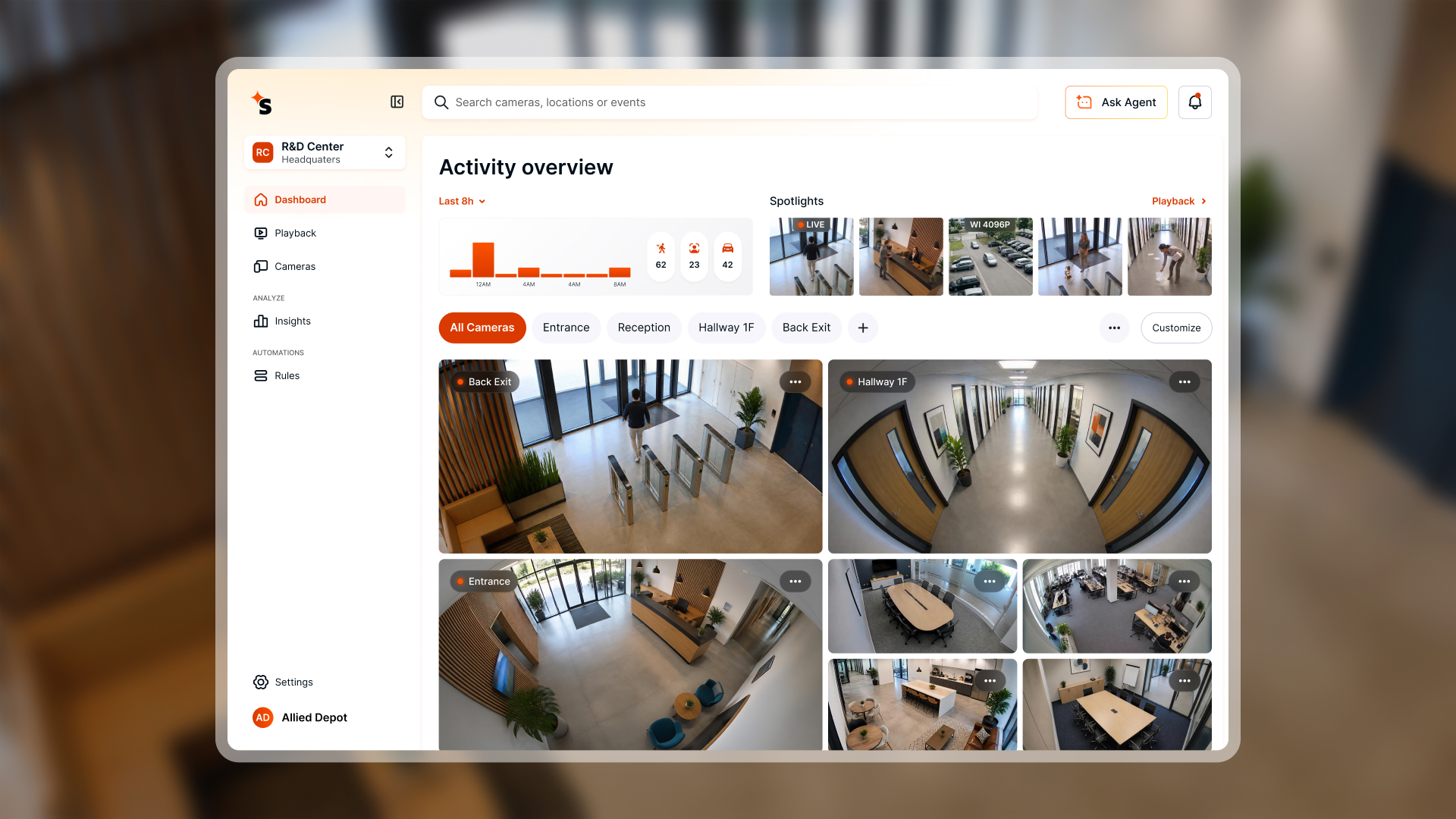
Dynamic spotlighting, live enterprise camera grids on web dashboard give security managers real-time situational awareness to monitor, analyze, and inspect feeds across all facility zones simultaneously.
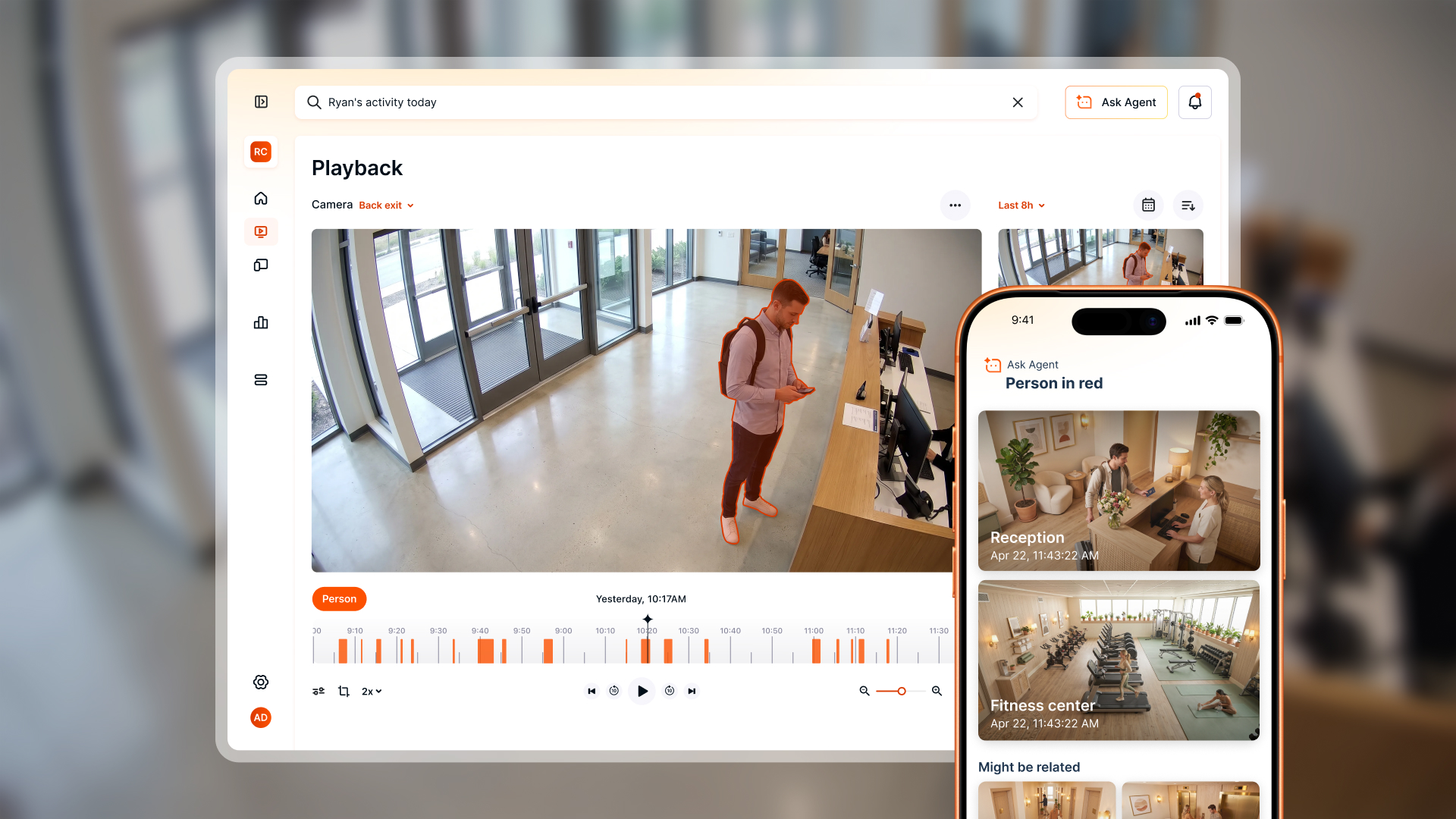
SQUAD Design Team transforms Edge AI, cloud data, and camera hardware into intuitive mobile, web, and device experiences for intelligent vision products.

covering live view, motion, AI search, and system scaling

connecting mobile apps, web dashboards, and device interfaces

through centralized and reusable design systems

UX/UI design and digital product development

Intelligent vision products, smart cameras, Edge AI, AI and IoT

Cross-functional R&D partnership

Global
The client is an R&D organization developing AI-powered camera solutions from sensor to cloud. The Design Team’s role is to connect complex camera technology with the end user through mobile apps, web platforms, and digital interactions that make intelligent vision products easier to use and ready for market.
The core challenge in intelligent vision products is not only capturing video, but also preventing user overwhelm. As hardware, cloud, and AI capabilities become more advanced, the product experience needs to stay simple, clear, and useful across different devices and usage contexts.
Notification fatigue could make users mute alerts if Edge AI triggered too many notifications.
Cognitive overload could make multi-camera monitoring difficult across different streams and network conditions.
Data accessibility was critical because users needed to search large volumes of AI-enriched video without feeling like they were querying a database.
Development bottlenecks appeared when new camera models or client needs required UI work to be rebuilt from scratch.
The client needed a design approach that could make intelligent vision products intuitive for end users while supporting product scalability across mobile, web, and hardware touchpoints.
SQUAD Design Team created a product design approach focused on four strategic interaction streams: live viewing, motion intelligence, AI-powered search, and reusable design systems.
Design of Live View and Multi-Cam Orchestration experiences that help users move from a grid of camera feeds to a focused single-feed view without losing context.
Design of Motion Detection and Smart Notifications that turn cameras into proactive tools while reducing notification fatigue through activity zones, alert logic, and timeline navigation.
Design of AI-Powered Insights, Smart Search, and Timeline experiences that translate AI metadata into a simple visual workflow for finding relevant video moments quickly.
Creation of Unified Design Systems for vision products, enabling consistent UI patterns across iOS, Android, web, on-device interfaces, in-car displays, and smart home panels.
Mapping of design use cases across business, home, and specialized scenarios to ensure the same product logic works for enterprise security, smart home users, and more advanced monitoring contexts.
The work relied on the following design methods and product frameworks:
Interaction design: live view, multi-camera monitoring, timeline navigation, smart notifications
AI experience design: AI search, metadata visualization, natural-language search flows, automated summaries
Design systems: reusable UI components, design tokens, cross-platform patterns, scalable interface guidelines
Product surfaces: mobile apps, web dashboards, on-device interfaces, smart home panels, in-car displays
Use case validation: business environments, home usage, and specialized intelligent vision scenarios
Across every core capability of the platform — live viewing, motion intelligence, AI-powered search, and the design system that ties it all together — we look at three distinct contexts: a business environment, an everyday personal setting, and a unique scenario that pushes the technology beyond its most obvious use. Together, these perspectives show that the same underlying system scales cleanly from enterprise operations to individual users without losing relevance in either direction.
Dynamic spotlighting, live enterprise camera grids on web dashboard give security managers real-time situational awareness to monitor, analyze, and inspect feeds across all facility zones simultaneously.
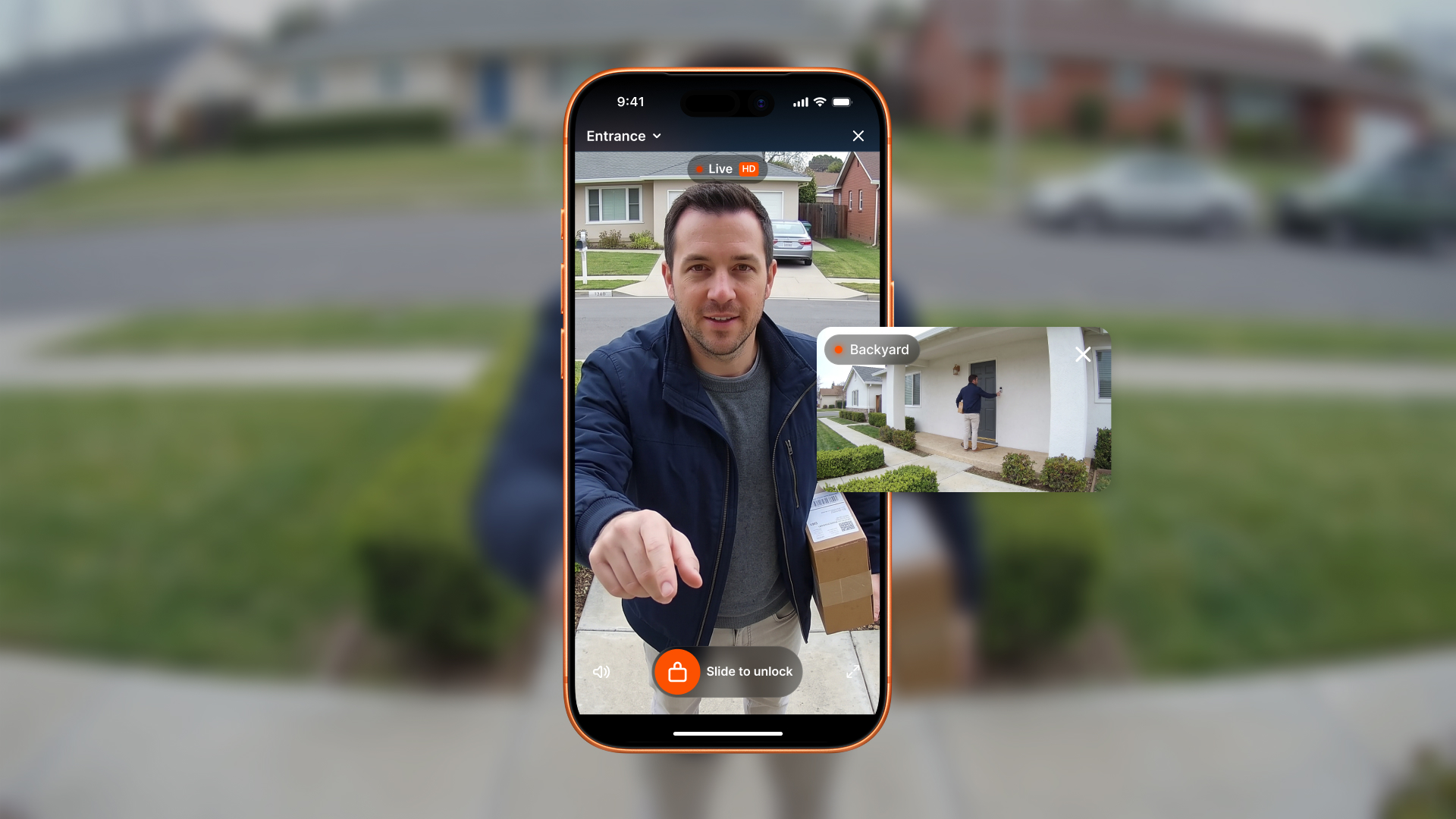
A live feed directly on phone's lock screen provides immediate visual coverage of both front entrance and side property without opening the app.
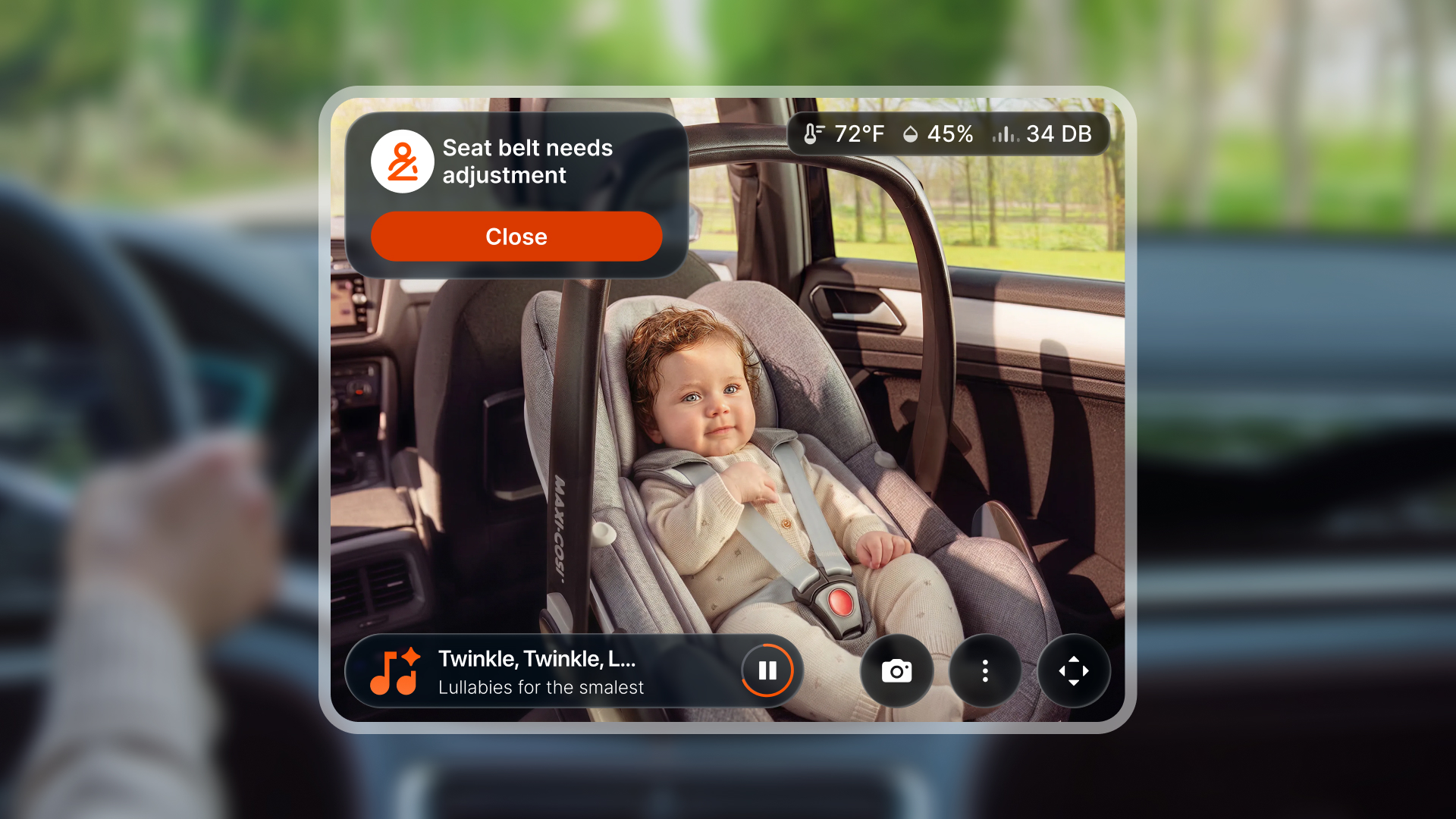
Child monitoring lets parents keep a continuous eye on the back seat via the cabin camera. Drivers receive instant alerts if the system detects an issue, allowing them to respond quickly while keeping their focus on the road.
SQUAD created a modular design foundation that supports consistent interface patterns across mobile, web, hardware-adjacent, and device-connected experiences.
The design approach covered the core product flows needed for intelligent vision systems, including live viewing, multi-camera control, motion detection, smart alerts, AI search, and timeline navigation.
Centralized components, patterns, and design logic help teams avoid rebuilding core UI flows from scratch for every new camera model, product surface, or client requirement.
The Design Team translated complex Edge AI, cloud, and camera capabilities into user-facing experiences that can be validated, reused, and scaled across product lines.
Users can monitor live feeds, review motion events, search video history, and understand AI-powered insights without unnecessary complexity.
Whether users interact through a mobile app, web dashboard, in-car display, or smart home panel, the product experience follows the same visual language and interaction logic.

Product Validation for a Battery-Powered Smart Doorbell



AI-Powered Customer Insight Agents


