Synthetic Data Platform for Rare-Event AI: Training Images from One Video Frame
AI models need examples, but rare events like wildfires, break-ins, or lost pets are hard to capture. SQUAD built a platform that turns real camera frames into realistic rare-event images and videos, giving AI teams training data they can’t get otherwise.

Around 2 240 000 images
planned with the platform

20 000 videos
for 3 AI features

3-engineer team
5 short phases, first working version shown in Phase 1
Client at a Glance

Service Type
Synthetic data platform engineering

Industry
Smart home security and connected cameras

Engagement
SQUAD built the platform to the client’s vision for them to deploy privately

Region
Global
The client makes a large range of smart home cameras. Its AI research infrastructure team builds the data and tools behind the computer vision models in these cameras. The team was preparing new AI features that help keep homes, people, and pets safe. To launch them, it needed far more training data than real footage could give.
Challenge
The client needed millions of training images for rare events, but real footage of those events was almost impossible to capture.
Why the usual ways didn’t work:
Too little data for key scenarios
The team had too few examples of rare events like break-ins or fence climbing. Without enough training data, models couldn’t learn to detect them reliably, putting new product features at risk.
Filming rare events doesn’t scale
Staging controlled fires or break-ins is slow, expensive, and often impossible. The team needed millions of images, not hundreds.
Privacy blocked the easy route
Real camera footage can include people, so the client couldn’t send it to outside AI services. Any solution had to keep all images of people inside the company.
Solution
SQUAD built a platform with 3 connected parts and used generative AI tools to create images and videos. The team tested the full platform in its own environment, then handed it over as a ready-to-deploy package the client could set up with one command.
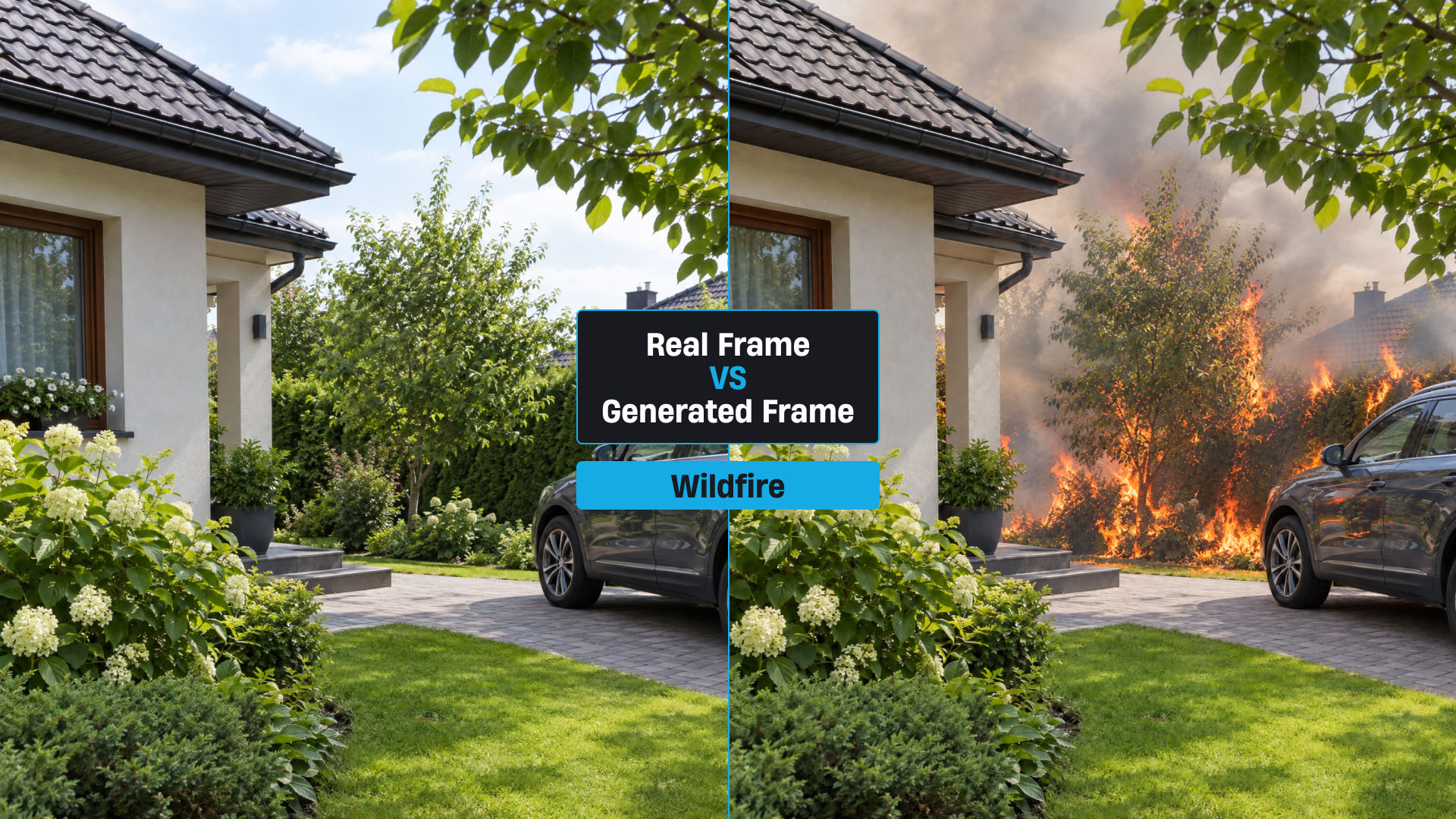
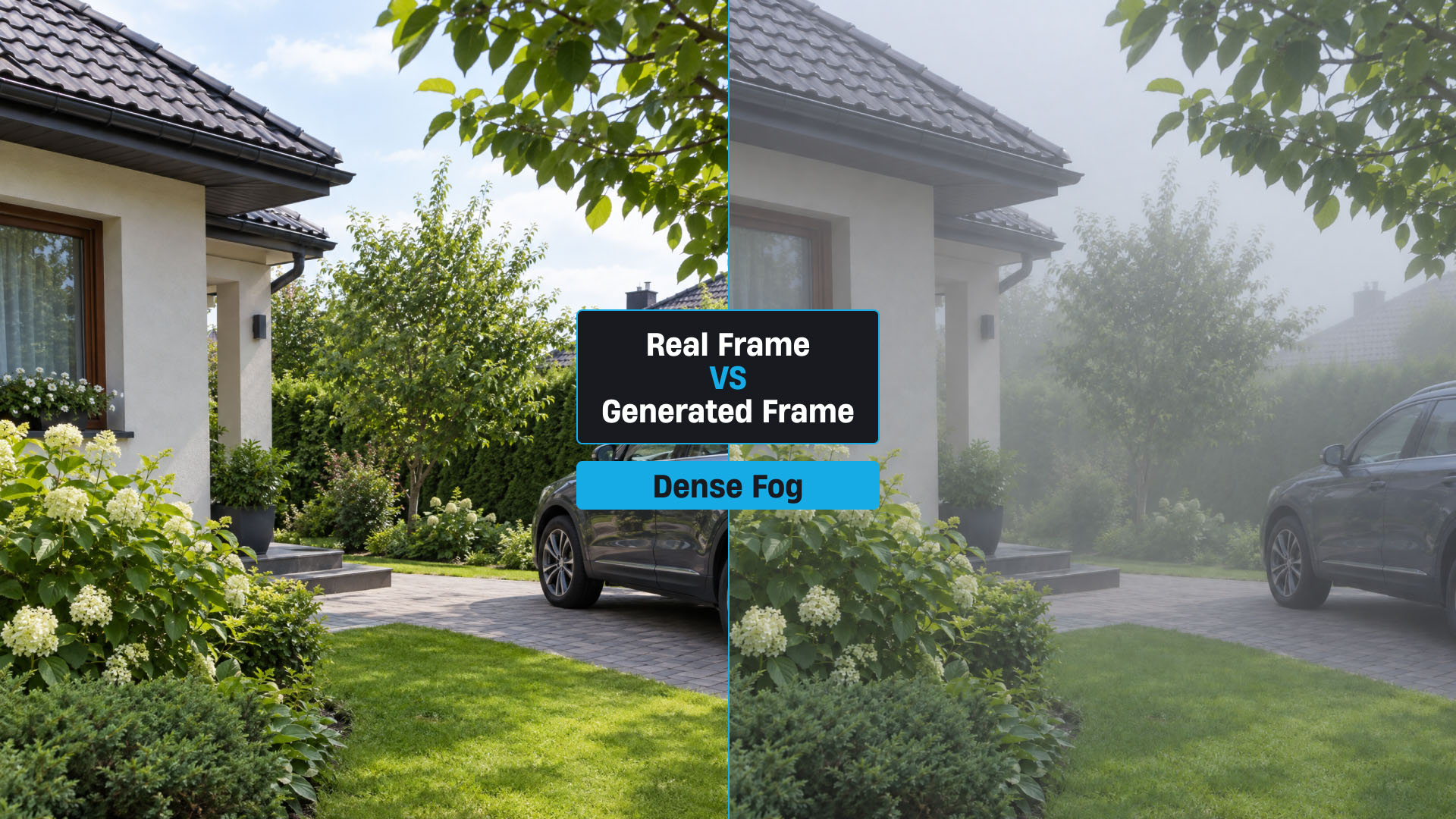
One real video frame turns into thousands of photorealistic variations of the same scene — with a wildfire at the fence, a smoke plume, night, dusk, heavy rain, dense fog, or snow. Generative AI then adds motion, for example a fire that grows over several seconds.
Synthetic playground: where scientists experiment
Before: Scientists tested prompts in scattered notebooks, with no easy way to compare results or share what worked.
After: Scientists pick a frame from a real video, adjust the prompt and settings, create an image, and turn it into a video. When the result looks right, they save the setup as a “Golden Template” for large runs.
Synthetic console: where data ops runs large jobs
Before: The team had no way to run, track, or review large generation jobs.
After: The data ops team picks a template, chooses source videos, and starts a job. A dashboard tracks each step, and the team can stop, restart, or compare original and synthetic results side by side.
Batch pipeline: the engine behind it
Before: Every dataset took manual work. Results weren’t consistent, and nobody could tell where a file came from.
After: An automated pipeline does the work in 5 steps:
- Takes the source videos
- Cleans them with the client's privacy tools
- Creates synthetic images
- Turns the images into videos
- Saves every file with a record of where it came from
Technologies and frameworks
Frontend: Svelte 5, Tailwind CSS, shadcn-svelte, WebSockets, Module Federation
Backend and API: Python, AWS Lambda, Amazon API Gateway
Orchestration: AWS Step Functions
Media processing: PyAV
Data: Amazon DynamoDB, Amazon S3, client data platform
Infrastructure and monitoring: AWS CDK, Amazon VPC, AWS IAM, Okta/Cognito SSO, Amazon CloudWatch
How we solved the hard parts
Privacy first
The client’s own tools remove people from every frame before anything goes to an outside AI service. This step is pluggable, so the client uses its own person-detection model, and human imagery never reaches third-party AI services.
Better quality for complex scenes
Some scenes, like a break-in with visible damage, didn’t come out right in one try. The SQUAD team splits the process into steps: first, the platform creates a clean base scene; then it adds night, rain, or fire to that scene.
Automatic quality check on every image
A detection model checks that each generated image actually shows the target event, such as fire or smoke. Its verdict — what it found, how confident it is, and where in the frame — is saved with the image, so weak samples don’t slip into training data.
Working within AI service limits
The video model accepted only about 10 requests per minute. SQUAD made the pipeline slow down, retry, and resume where it stopped. Retries skip items that are already done, so large jobs finish without breaking, and no work is paid for twice. When the provider changed its limits mid-project, the team tested the new limits early and planned around them.
One login for scientists
The client’s internal portal uses a different framework than the Playground. SQUAD made the Playground load inside that portal, so scientists can use it with their usual login.
Safe access to files
All videos and images stay in private storage. Links expire quickly and renew on their own. Nothing is ever public, and long work sessions don’t break.
How we worked
The SQUAD team worked in 5 phases of 2-3 weeks, each ending with a live demo.
Phase 1 tested the riskiest part: creating images and videos with generative AI models. Later phases added the Console, the Playground, and stability fixes.
When the client requested new features mid-project, we adjusted the plan and communicated the updated timeline clearly.
Results & Impact
technical outcomes
Data that filming could never deliver
The platform was built to support about 2.24M images and 20K videos for wildfire detection, lost-pet search, and activity detection.
Full tracking, no size limits
Thousands of items run in parallel, with every generated file fully traceable back to its source video, template, job, and date, plus the prompts, model versions, and quality-check results. It all sits in one searchable data hub, so any training image can be traced back to its real-world frame.
business outcomes
Easy launch, effortless scale
The client set up the whole platform in its private environment with one command. One saved template works for any number of datasets. Scientists do not repeat the work for each run.
Costs that follow output
With no idle servers, the client pays for generation only when a batch actually runs.
customer outcomes
Privacy protected
No images of people reach outside services.
Accurate detection for rare threats
Homeowners get new protection features — like wildfire detection, lost-pet search, and break-in alerts — that reliably detect real dangers even in heavy rain, fog, snow, or total darkness.
Do your AI models need to detect events that are too rare to film?
SQUAD can build a platform that turns your existing footage into training data at scale, with privacy and tracking built in. A small pilot on one use case
is the easiest way to start. Get in touch and we will plan it with you.
Contact us
by filling out
the form
to get started.

Get In Touch
Other Cases
AI-Driven Database Design Framework for Vision Products Analytics

47% faster warehouse delivery

96% lower data-quality NULL rate

99.9% production reliability
Product Design for Intelligent Vision Products

4 core interaction areas designed

Unified UI/UX across platforms
